
Early Roots of Resistance

By KIM SAVAGE

Love is an unstoppable force, pushing through all oppositional forces and accomplishing its goal to heal, join, rescue, preserve, and provide emotions humans desire to feel. Love is the artillery, and it wins every time! The term homosexuality was first used in 1868 and is not suitable for describing the relationships that we identify as LBGTQIA plus.
This word “homosexuality” is part of the early roots of opposition. Homo means same; sex means biological classification based on chromosomes, hormones, and reproductive anatomy. None of us are the same! In ancient times, relationships centered around producing legitimate heirs, political alliances, and strict gender roles rather than romantic love.
LBGTQ plus relationships exceed, do not comply with, and exist outside of gender roles, tradition, and politics. They come together as a result of something magnetic, spiritual, unseen laws, and purposefulness. LGBTQIA plus attraction is like a fire that can not be put out; it is always and forever burning. Anything that attempts to get in its way will be consumed because it will resist.
Romantic relationships that existed before modern times were more about the spirit of an individual rather than sex or gender, although these two are components.

Many indigenous cultures in North America recognized what we now call Two-Spirited individuals. These are people who embodied both masculine and feminine energies and often held respected roles within their communities. The spirit and energy of an individual is what people come in contact with during intimate conversation rather than sexuality. Sexuality is mostly how people express themselves through sexual activities and the reproductive organs. There is feminine energy and masculine energy and this is what we experience and are attracted to when encountering certain people. Energy is definitely a part of what we see physically; however, underneath attraction lies something deeper and it is the spirit and soul.
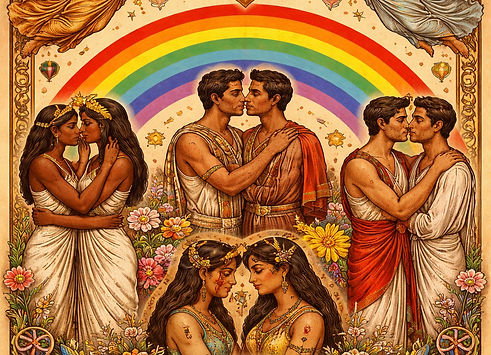
In ancient Mesopotamia, some priests were known to embody both masculine and feminine traits, serving as sacred intermediaries between worlds.
In Ancient Egypt, tomb art has been interpreted by some scholars as depicting intimate same-sex relationships, bodies leaning into each other in ways that feel unmistakably romantically intimate. In Ancient Greece, relationships between men, particularly in intellectual and mentorship contexts, were woven into the social fabric.
Love between women, though less documented, echoes through fragments of poetry, most notably from Sappho, whose words still hum with longing across centuries. Men with power as early as the 16th century opposed relationships between two women and two men.
King Henry VIII’s Buggery Act of 1533 made sodomy (anal and oral sex) a capital offense, and the Labouchere Amendment of 1885 in the UK.

Religion & Law Shaping Restrictions.
Laws against homosexuality began to form during the medieval period and intensified during the 19th century, separating God from his creation, which includes LGBTQ+ people, of course. The bible uses the term homosexuality, which does not describe the relationship dynamics that are formed by people on the LGBTQ+ spectrum, as mentioned.
The bible is not in error; however, the men attempting to label what they hated were. LGBTQ plus relationships are deeper than physicality (sex or sexuality) and involve the unseen spirit and soul of an individual. For example, a woman can identify with being a man from within, and a man can identify with being a woman from within, which doesn’t align with their gender assignment; however, they can not escape or deny how they feel inside. Some have shared that they were a man trapped in a woman’s body and vice versa.
“If a man lies with a male as with a woman, both of them have committed an abomination: they shall be put to death”.
The definition of abomination is not sin but something that is greatly disliked. In this particular passage, the men of that day expressed their dislike for two men being together intimately; however, when most people read this scripture, they understand it as stating that what was witnessed was a sin, which is false.
We understand clearly today that it doesn’t make a difference if people dislike the romantic relationship individuals are involved in; this dislike is a personal problem.
Religion and relationship with God are two very different things. Relationship with God is personal, and religion killed Jesus because of the law.